Getting to Agadir in 2026: Why There's No Train, and How to Actually Arrive
There is no train station in Agadir. The closest ONCF stop is Marrakech. An honest guide to actually getting to Agadir in 2026 — by bus, taxi, road, or air.
There Is No Train Station in Agadir
Let’s get the headline out of the way: you cannot take a train to Agadir. There is no ONCF station in the city. There hasn’t been one in any meaningful sense since the colonial-era freight line was decommissioned decades ago. If your travel agent, your Google search, or a hopeful blog post implied otherwise, they were wrong.
The southernmost station on Morocco’s national rail network — operated by ONCF — is Marrakech. From Marrakech, the train ends. Everything south of that line, including the entire Souss region and the Atlantic coast down to the Western Sahara, moves by road or by air.
This is the most common single confusion for first-time visitors planning a Morocco trip. People assume the country is rail-connected the way Spain or France is, see Casablanca–Tangier high-speed train marketing, and assume the network reaches Agadir. It doesn’t. What follows is the honest version of how to actually get here in 2026 — from Marrakech, from Casablanca, from Europe, and from the airport once you land.
Why There’s No Rail to Agadir
A short version, because this isn’t a history piece.
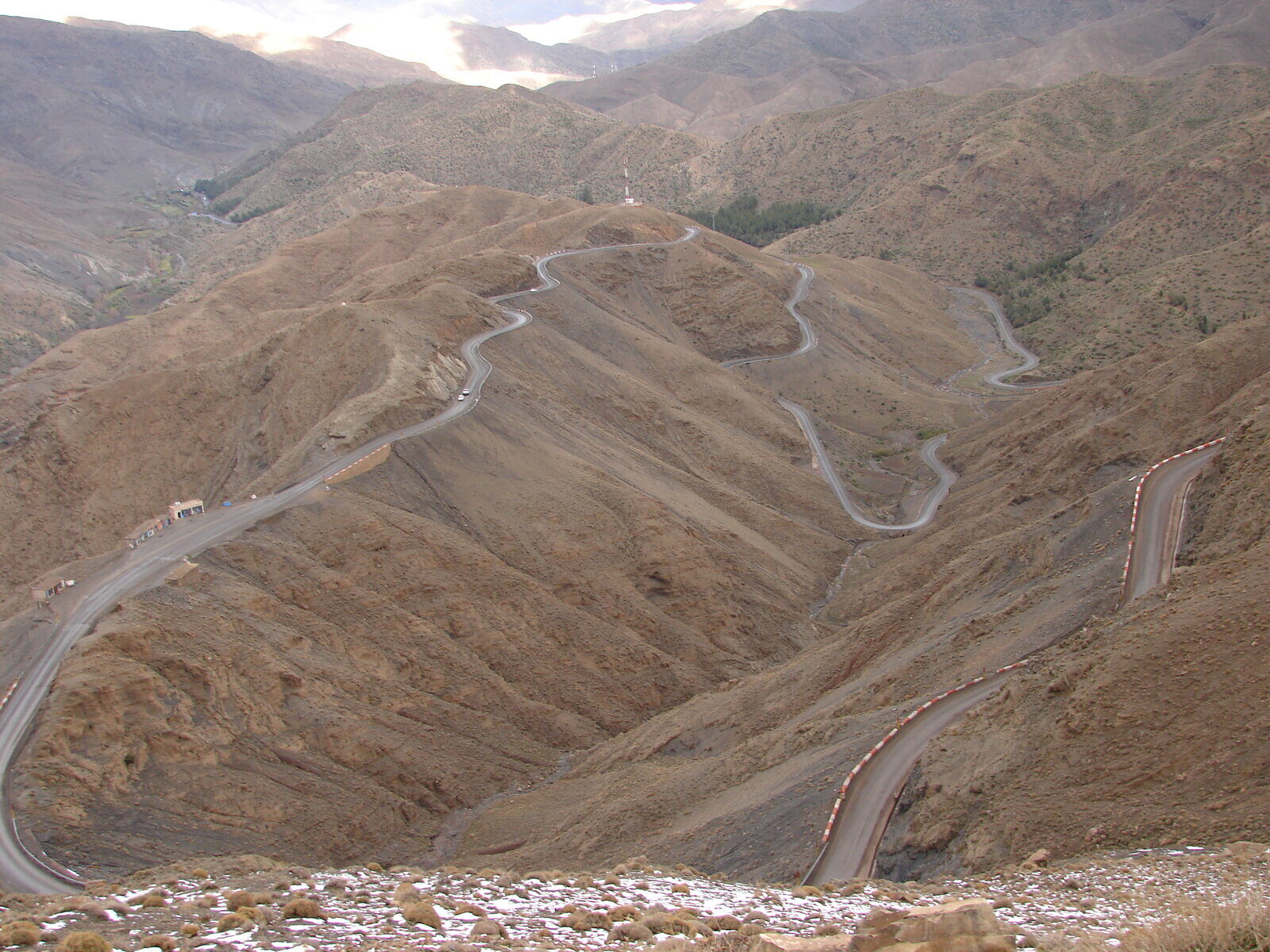
Agadir’s relationship to rail is shaped by two things: terrain and timing. The line from Marrakech to Agadir would have to cross the western flank of the High Atlas — a stretch of country that’s mountainous, sparsely populated, and expensive per kilometre to tunnel and bridge. The colonial-era network laid by the French protectorate prioritised phosphate freight and the north-south spine between Casablanca, Rabat, Fès, and the Mediterranean ports. Agadir was a small fishing town then; the economics of running passenger rail across the Atlas to serve it never made the priority list.
By the time Agadir grew — first as a port, then catastrophically interrupted by the 1960 earthquake, then rebuilt as a beach-resort city through the 1970s and 1980s — the dominant mode of intercity travel in Morocco had already become the long-distance coach. Companies like CTM and Supratours covered the route from Marrakech in around three hours; the road improved; the case for rail kept losing.
There is now serious discussion of a future LGV (ligne à grande vitesse — high-speed rail) extension that would carry the Casablanca–Marrakech high-speed corridor further south, eventually to Agadir and possibly to Laâyoune. Studies have been published. Routes have been sketched. Funding has been discussed. As of early 2026, ground has not been broken on the Marrakech-to-Agadir extension, and Moroccan infrastructure timelines on projects of this scale are not famously short. Plan your 2026 trip without expecting a train.
The Closest Active ONCF Station: Marrakech
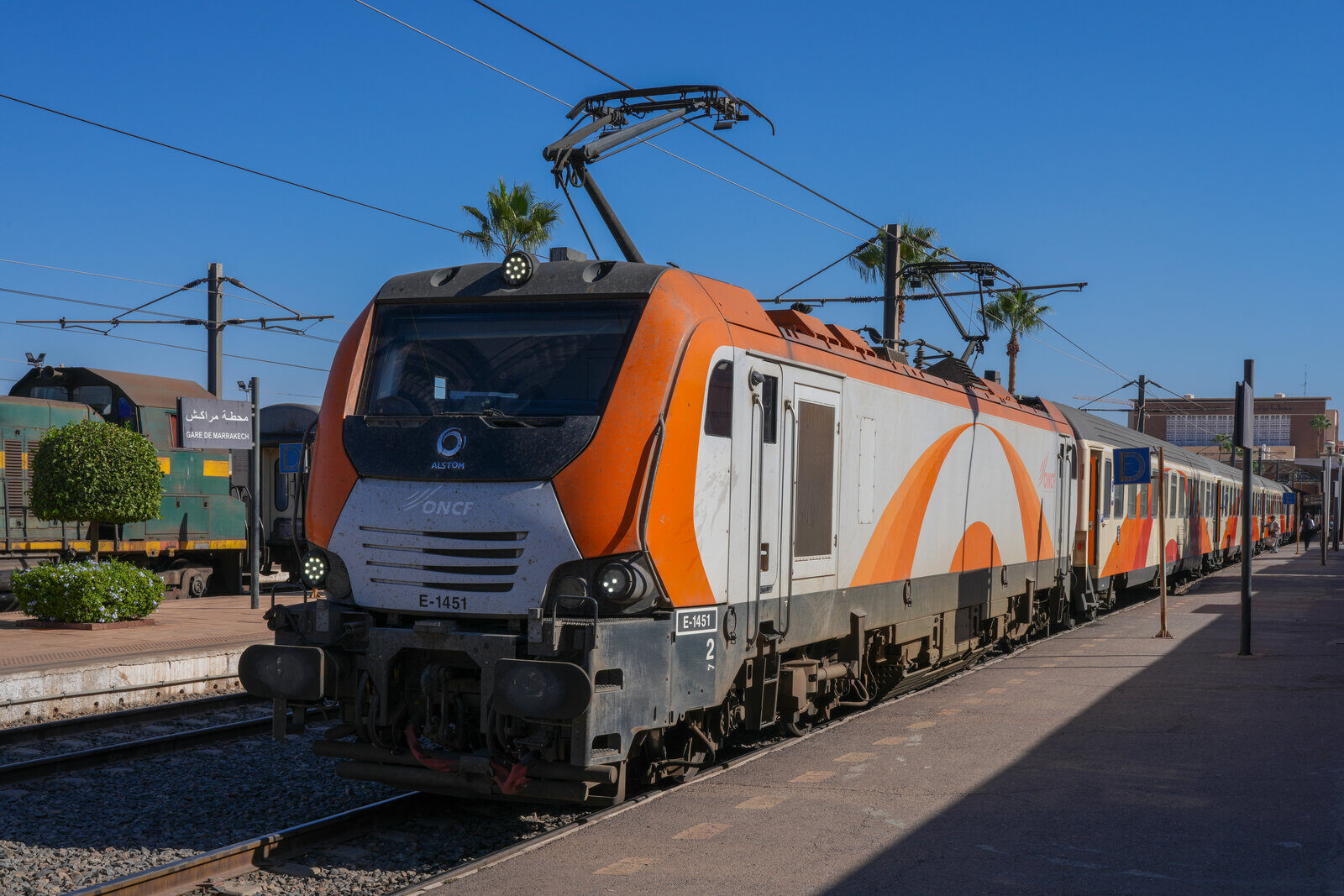
If you want to arrive at Agadir by combining rail and road, the play is: train to Marrakech, then bus or grand taxi onward. Marrakech’s main rail station (Gare de Marrakech — central, modern, well-organised) is the end of the line going south. ONCF runs frequent services from Casablanca, Rabat, Tangier, and Fès. Times and fares vary; check the current ONCF timetable on the day you book.
From Marrakech onwards to Agadir is around 250 km. There are four honest ways to cover that distance, and we have a dedicated piece on it: how to get from Marrakech to Agadir in 2026. The summary version follows.
Option 1: Long-Distance Coach (Supratours or CTM)
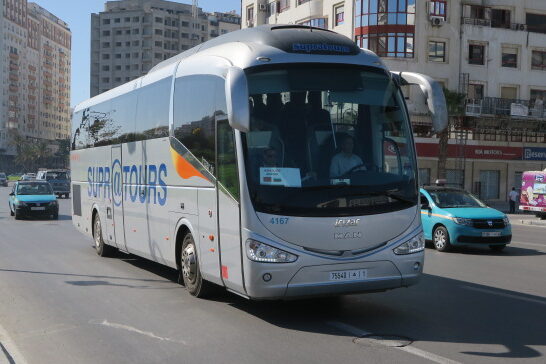
The default. Both Supratours (owned by ONCF and physically connected to many of their stations) and CTM operate scheduled coaches between Marrakech and Agadir. Journey time is around three hours, sometimes 3.5 with traffic on the Marrakech ring road or the Agadir entrance. Fares run roughly 120 to 180 dirhams one-way at the time of writing, depending on operator and how far in advance you book.
Go if: you want a fixed seat number, air conditioning, a hold for your bag, and a predictable arrival time. You will arrive at a real bus station with a desk and a sign, not a roadside drop. For most foreign visitors, this is the right answer.
Skip if: you’re travelling at the last minute on a peak summer Friday and there are no seats, or you genuinely prefer the local-traffic experience of a shared taxi.
Buy tickets at the station counter, at the operator’s website, or in some cases through your hotel. The Supratours desk in Marrakech is inside or directly next to the ONCF rail station, which makes a train-then-bus connection straightforward — you walk a few metres from the platform to the coach gate.
Option 2: Grand Taxi (Shared or Chartered)
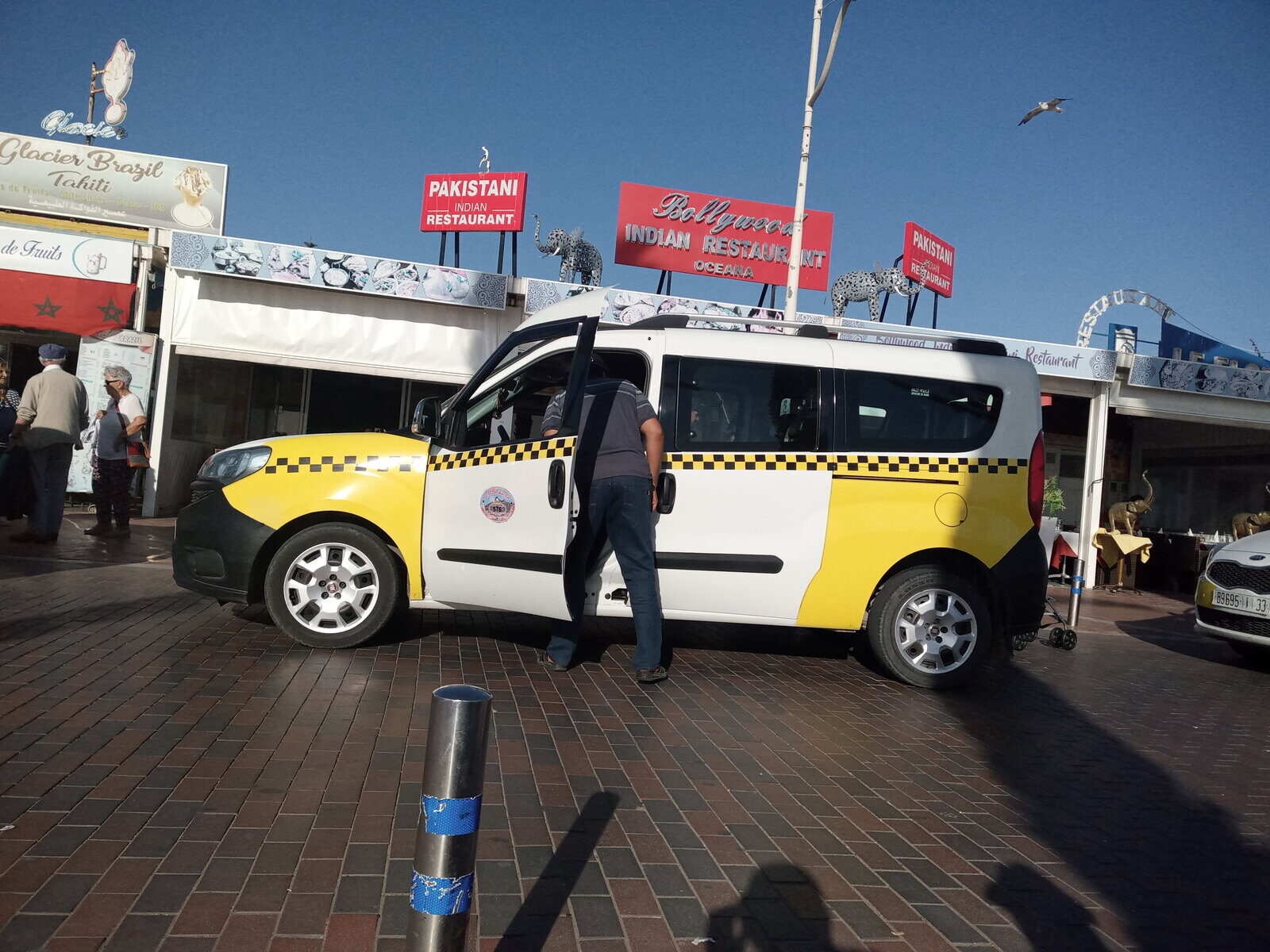
A grand taxi in Morocco is, historically, an old Mercedes 240 saloon that takes six paying passengers — two in front next to the driver, four squeezed across the back — and leaves when full from a fixed taxi station. Newer minivans are increasingly common. The grand-taxi system covers the country in a loose web that complements rather than competes with the buses.
Marrakech to Agadir by shared grand taxi runs around 150 to 250 dirhams per seat depending on the season and how good your Darija is at the haggle. Journey time is around 3 to 3.5 hours, with one short stop. The driver will leave when the car is full; that wait can be 10 minutes on a busy morning or an hour on a quiet afternoon.
Go if: you want a faster door-ish-to-door-ish trip, you’re travelling with one or two people who don’t mind close quarters, or you want to charter the whole car (all six seats) for around 900 to 1,200 dirhams and arrive on your own schedule.
Skip if: you’re claustrophobic, you have heavy luggage that won’t ride well on a roof rack, or you prefer to know exactly when you’ll arrive.
Foreign visitors are sometimes quoted a tourist price on the first ask. Knowing the rough per-seat rate above lets you push back politely. Ask for the prix normal.
Option 3: Drive Yourself (the A7 Highway)
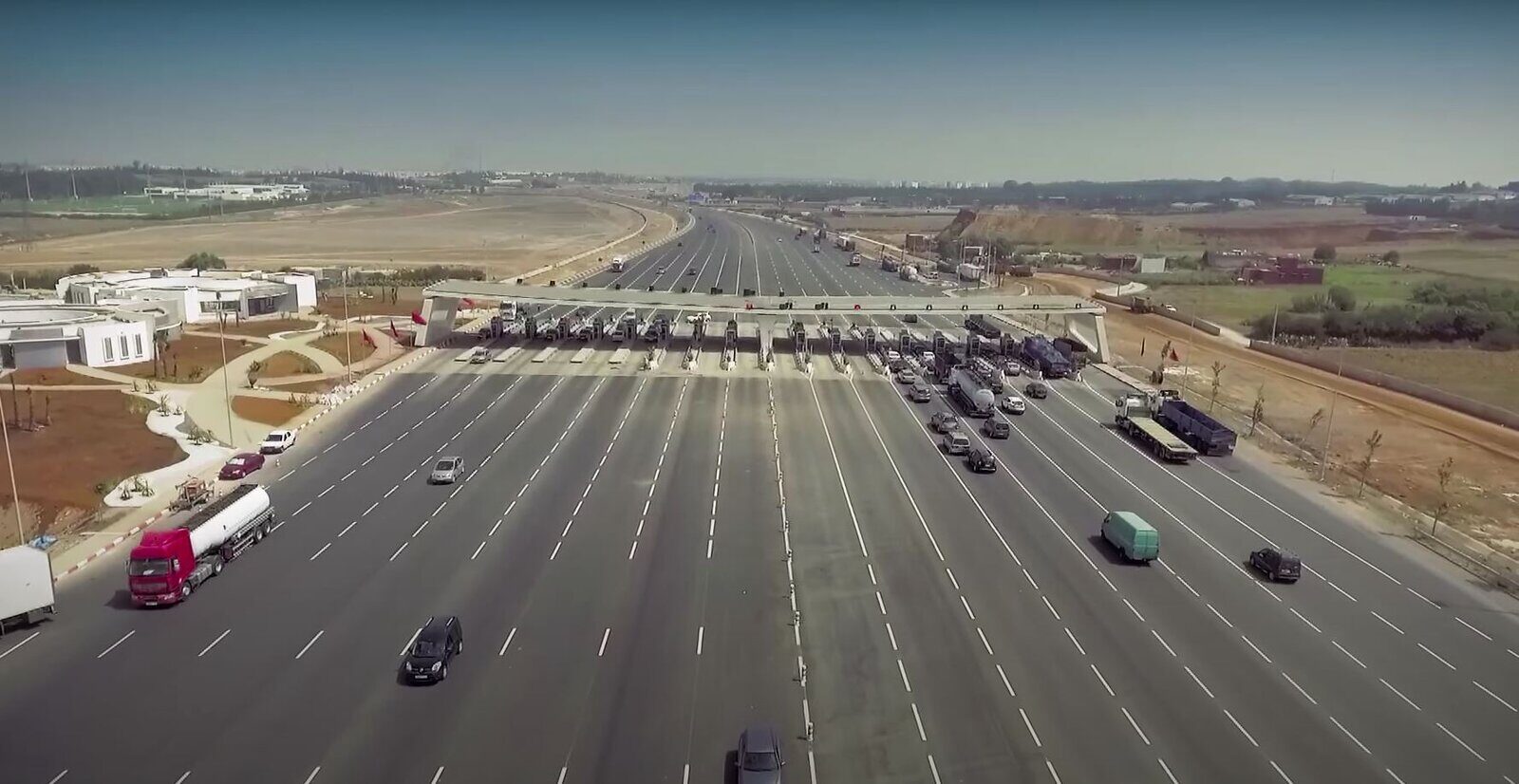
The Marrakech–Agadir motorway, the A7, opened in 2010. It’s a proper dual-carriageway toll road, well-maintained, and covers the route in roughly 2.5 to 3 hours at sensible speeds. Tolls total around 80 dirhams one-way for a passenger car at the time of writing.
The drive is scenic in a sober way — the Atlas hills to your east for much of the route, argan country opening out around Imi Mqorn, glimpses of the Atlantic as you descend toward the coast. There is one major rest area around the halfway point with fuel, food, and toilets.
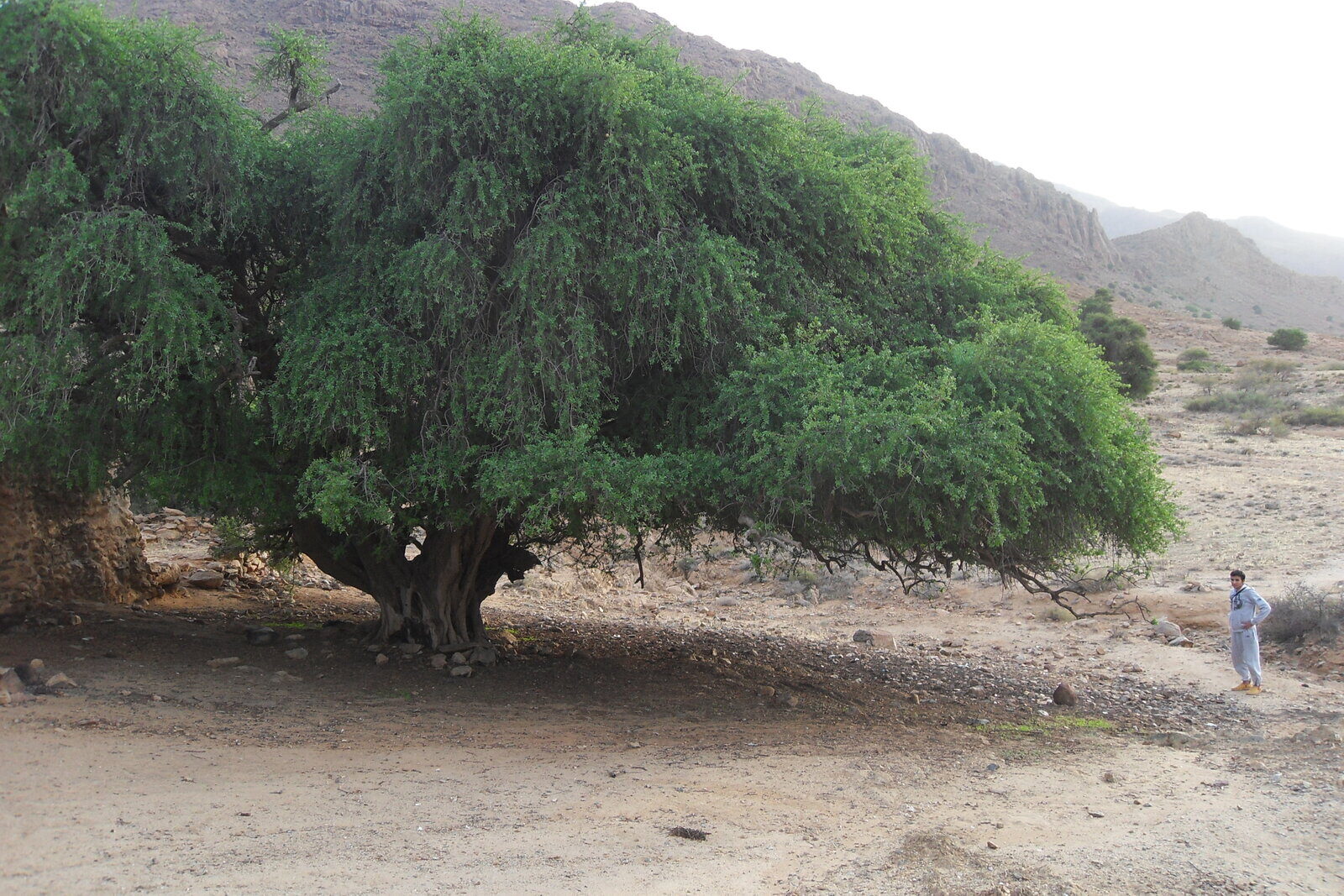
Go if: you want flexibility, you’re combining Agadir with day trips to Paradise Valley or the Souss-Massa National Park where a rental car is genuinely useful, or you’re continuing south from Agadir to Tafraoute or Sidi Ifni. Travellers coming from Europe by campervan via the Algeciras ferry often base in Agadir for a few weeks — renting a campervan locally is another option if you flew in.
Skip if: you’re staying inside Agadir and Taghazout the whole trip — petit taxis and the airport bus cover that radius cheaply, and parking on the corniche is a minor sport.
Standard rental-car cautions apply: take photos of the car at pickup, keep the insurance paperwork handy, and don’t agree to anything verbal that isn’t on the form.
Option 4: Fly Direct to Agadir-Al Massira (AGA)
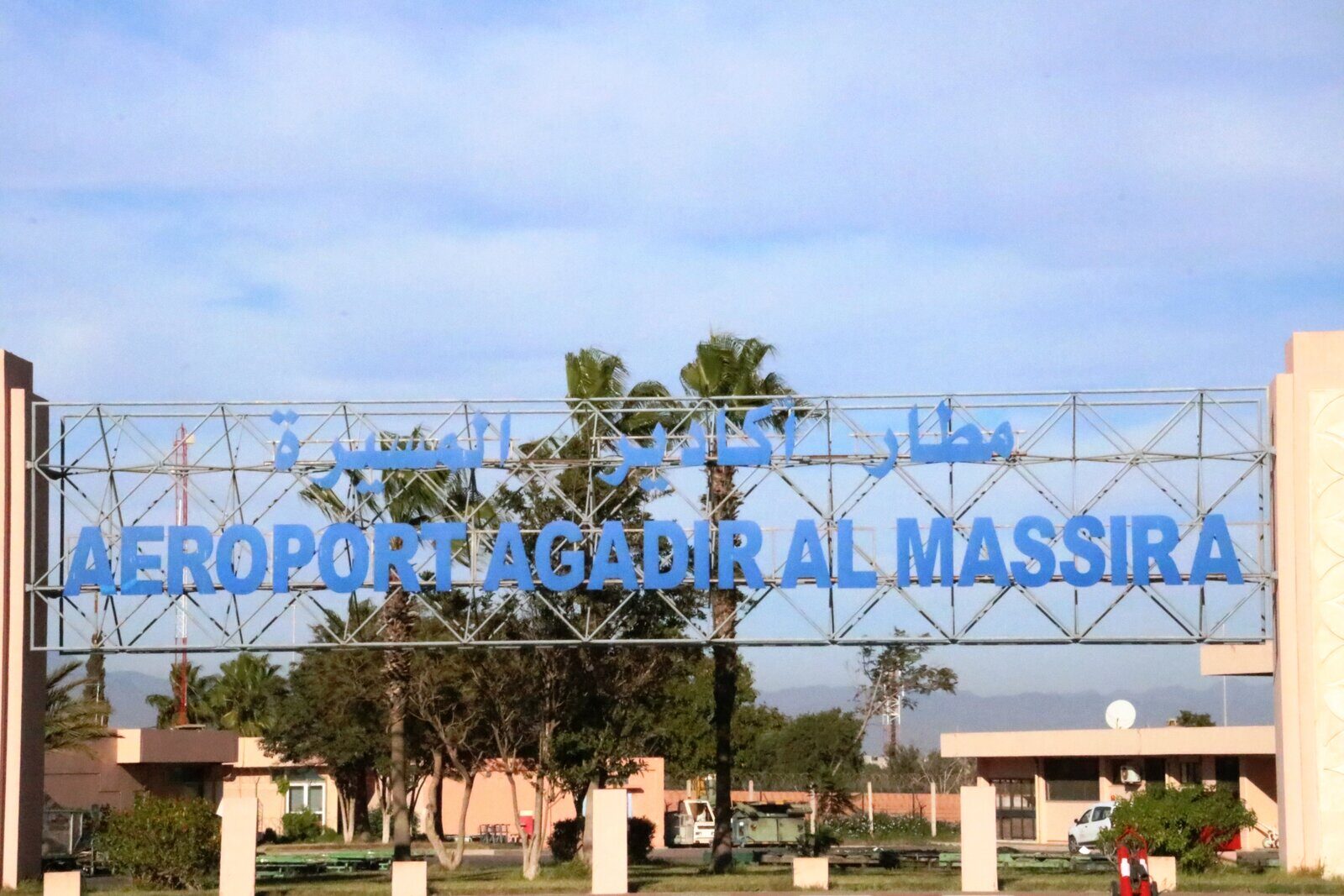
Agadir has a working international airport, code AGA, located around 25 km southeast of the city centre near Al Massira. It is the right answer for most visitors coming from Europe.
Regional and European routes vary by season. In peak winter — roughly November through March — Agadir is a major sun-destination for northern European charter and low-cost traffic, with direct flights from London, Manchester, Paris, Brussels, Amsterdam, Madrid, Düsseldorf, and similar. In summer the schedule thins; some carriers run only seasonal routes. From other Moroccan cities, Royal Air Maroc and a couple of low-cost competitors operate Casablanca–Agadir and a handful of other domestic legs.
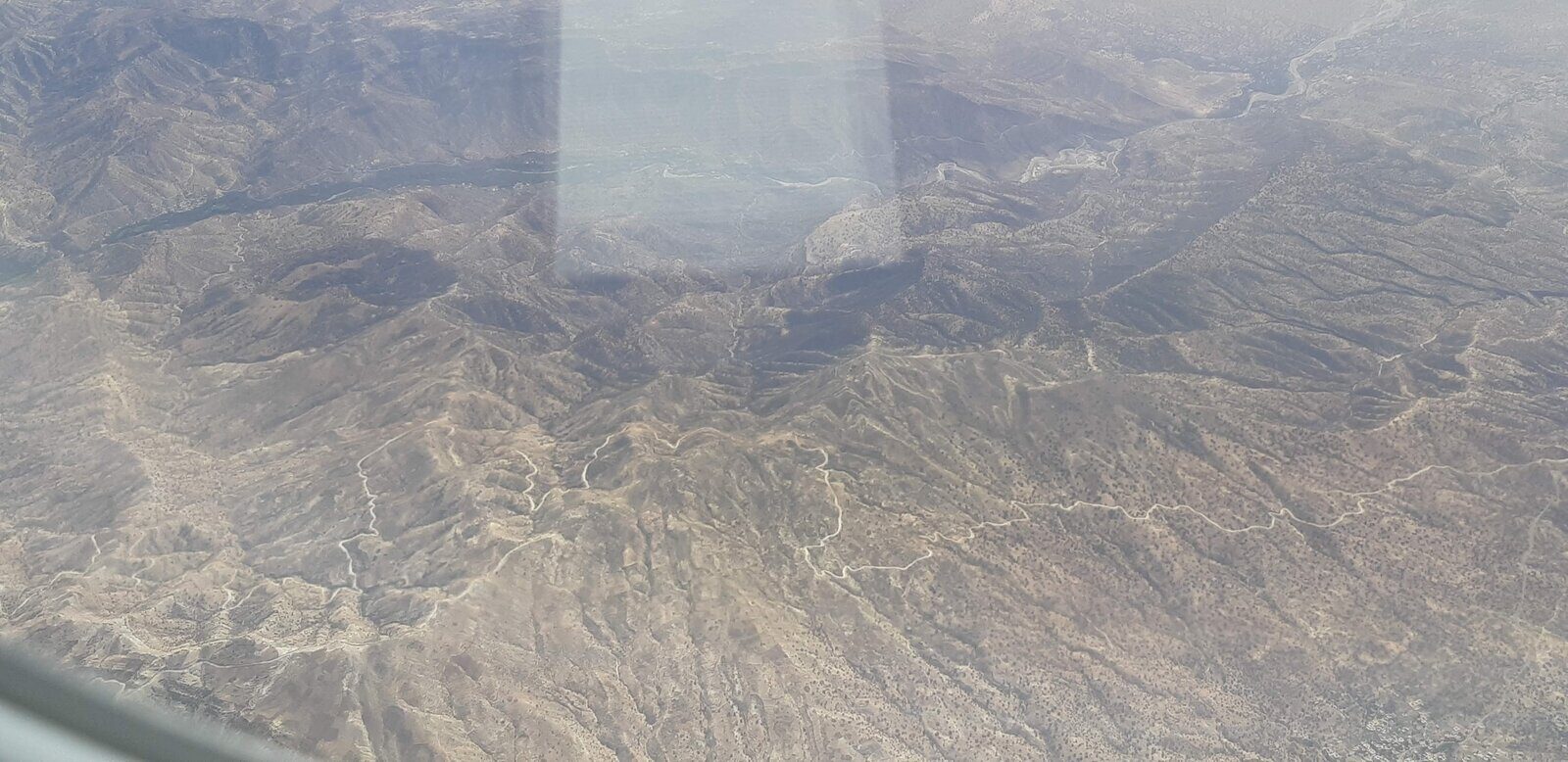
Schedules and fares change constantly. Book through the airline directly when you can; the search-engine prices for AGA are usually accurate, but watch for hidden baggage and seat fees on low-cost carriers.
Practical Scenarios
Three common situations, three honest answers.
“I’m landing in Casablanca (CMN). Can I take the train down?”
You can take the train as far as Marrakech and then continue by road. Casablanca to Marrakech is around 2.5 hours by ONCF; Marrakech to Agadir is another 3 hours by Supratours/CTM. Total elapsed door-to-door is typically 6 to 8 hours including transfers and waiting.
If your final destination is Agadir and time matters, consider a connecting flight from Casablanca to AGA — around 70 minutes in the air, total elapsed 3 to 5 hours depending on the connection. If you want the country to unfold gradually and you’d enjoy a night in Marrakech, the train-then-bus route is the better story.
“I’m already in Marrakech. What’s the fastest way?”
The honest answer is the highway, either by chartered grand taxi (around 3 hours door-to-door, around 1,000 dirhams for the whole car) or by Supratours coach (around 3.5 hours including station transfers, under 200 dirhams). There is no faster ground route. Flying Marrakech–Agadir exists in theory but the flight time savings disappear into airport waiting, and the schedules don’t favour day-trippers.
“I’m flying direct to AGA. What’s the airport-to-corniche move?”
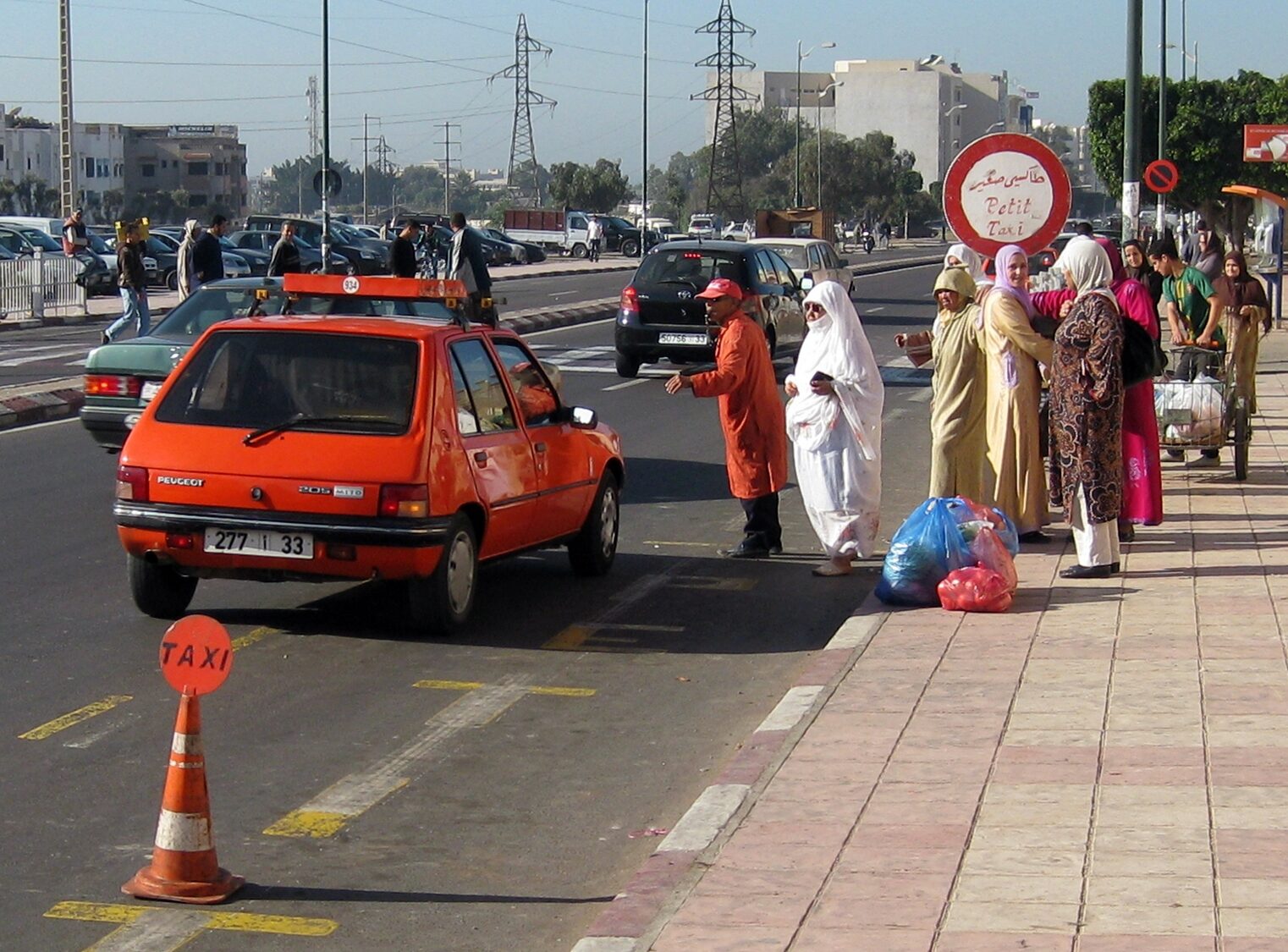
The airport sits roughly 25 to 30 km from central Agadir, depending on which hotel along the corniche you’re heading to. Three options:
- Petit taxi. The licensed taxis outside arrivals cover the trip in 25 to 35 minutes. Expect around 150 to 250 dirhams for a daytime fare to the corniche or the Marina; the rate is higher at night and during the early-morning hours. Agree on the fare before you get in. The meter is supposed to be used; in practice, fixed prices are negotiated for the airport run.
- Airport bus (line 22). A scheduled public bus runs from the airport into Agadir’s city centre. Fares are minimal — single-digit dirhams. The service is genuine but the schedule is not minute-perfect; if you’ve just landed with luggage and small children, the petit taxi is usually the saner choice. For solo travellers on a budget, the bus is fine.
- Onward to Taghazout or Tamraght. If your destination is the surf coast north of the city rather than the corniche itself, the route is different and the price is higher. We’ve written it up properly in how to get from Agadir airport to Taghazout in 2026.
There is no Uber, Bolt, or equivalent rideshare in Agadir at the time of writing. Don’t plan around one. The petit-taxi network and the airport’s licensed-taxi rank do the job.
What About the Future?
Two things to keep an eye on if you’re planning a later trip.
The first is the LGV extension already mentioned — the proposed high-speed rail link from Marrakech onward to Agadir, and eventually further south. Studies and political announcements have happened. Construction at scale has not. Moroccan rail projects of this size historically run on multi-year timelines that slip; betting your 2027 or 2028 itinerary on its existence is not the move.
The second is incremental airport expansion at AGA. The terminal has been upgraded in recent years and route additions to and from European cities continue. The practical effect for visitors is mostly better off-season options.
For now — for 2026 — plan around the truth that’s actually on the ground: train to Marrakech, road or air the rest of the way. The Marrakech–Agadir corridor is well-served by coach and grand taxi; the AGA airport is well-served from Europe. The “train station in Agadir” you may have read about isn’t there. The city’s transport system works without it.
Once You’re In the City
A quick note for completeness. Inside Agadir, the Marina and the Corniche promenade are walkable end-to-end in about an hour. Petit taxis cost 10 to 25 dirhams for almost any in-town hop. The city is grid-planned (a consequence of the post-1960 rebuild) so getting around is straightforward; addresses make sense; the seafront is the obvious orientation point. There is also a small tourist road train called the petit train touristique that loops part of the corniche — which is, ironically, the only “train” you’ll find in the city.
If you want a base-camp guide for the in-town logistics — neighbourhoods, where to stay, what’s worth your time — start with where to stay in Agadir, Taghazout and Tamraght, and for the bigger-picture question of whether the city is right for your trip at all, is Agadir worth visiting in 2026.
Pick Honestly
- Coming from Europe, going straight to a beach holiday: fly direct to AGA, petit taxi to the corniche.
- Coming from Casablanca or Tangier, want to see the country en route: ONCF train to Marrakech, overnight there, Supratours coach to Agadir the next day.
- Already in Marrakech, on a short trip: Supratours coach. Three hours, under 200 dirhams, a real bus station at each end.
- Travelling as a small group with luggage, want flexibility: charter a grand taxi from Marrakech, or rent a car and take the A7.
- Looking for the train station in Agadir: there isn’t one. There won’t be one in 2026. The closest is in Marrakech, 250 km north. Plan around it.
The absence is the answer. Once you stop looking for the train that isn’t there, the rest of the route is obvious.
Keep reading
 practical
Surfing for Beginners in Morocco: Taghazout's Honest Reality 2026
A first-timer's honest guide to learning to surf in Morocco. The right breaks, the right week, the realistic costs, the surf-camps that actually teach beginners — without the brochure gloss.
 comparison
Taghazout vs Tamraght 2026: Where Should You Stay for Surfing?
An honest comparison of Taghazout village and Tamraght for a surf trip in 2026 — wave access, accommodation, food, vibe, cost, and getting around. Pick the right one.
 seasonal
Surfing in Taghazout by Season: When to Go for Your Level 2026
When to surf Taghazout depends on your level. An honest seasonal guide — winter for advanced surfers, summer for beginners, and shoulder months for the rest of us. Water temps, wave size, wetsuit thickness.