Agadir Oufella: The Kasbah Above the City — A Visitor's Guide
Why the kasbah above Agadir is empty inside, what the hillside inscription means, and the honest answer on whether the cable car is worth it. A visitor's guide.
Agadir Oufella: What’s Actually Up There
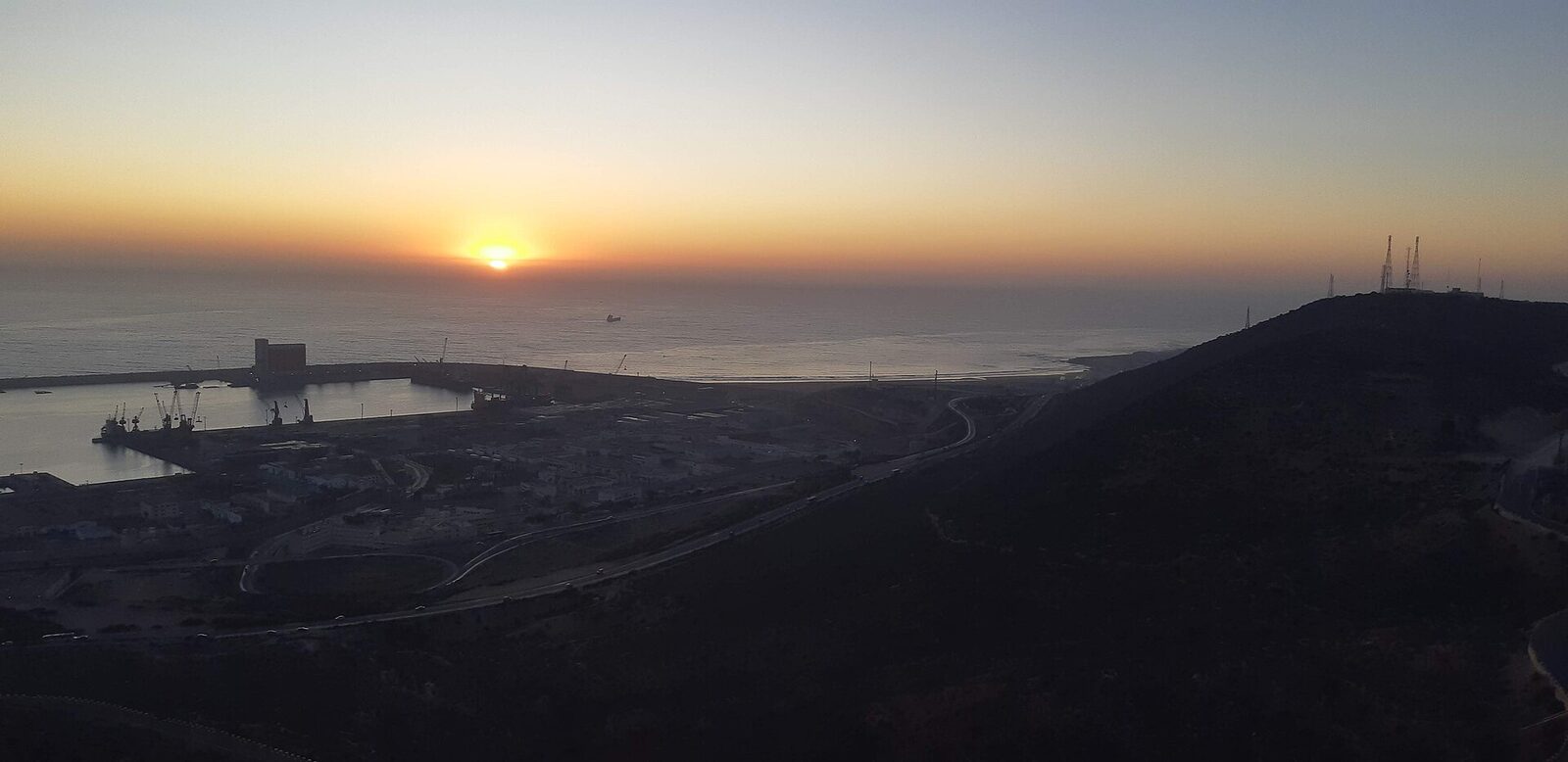
Agadir’s most famous landmark is a hilltop, not a building. There used to be a building — a fortified Berber kasbah with a thick crenellated wall, founded in the sixteenth century by the Saadians as a defensive perch over the Atlantic and the trade routes inland. On the night of 29 February 1960, an earthquake shook for fifteen seconds, and most of it came down. Most of the city below it came down too. Around 15,000 people died — roughly a third of the population of Agadir at the time. The new Agadir, the grid-planned modern city visible from the corniche, was built afterwards on the rubble.
The hill is called Agadir Oufella (“the high agadir,” in the Tashelhit language — “agadir” itself means “fortified granary”). Today you go up it for two reasons: the view, which is the best in the city and possibly the best on the whole Souss coast, and the sense of standing somewhere the city’s modern existence is built around remembering.
This guide covers what you’ll actually find up there in 2026, how to get there, and which times of day are worth the trip.
What You See When You Arrive
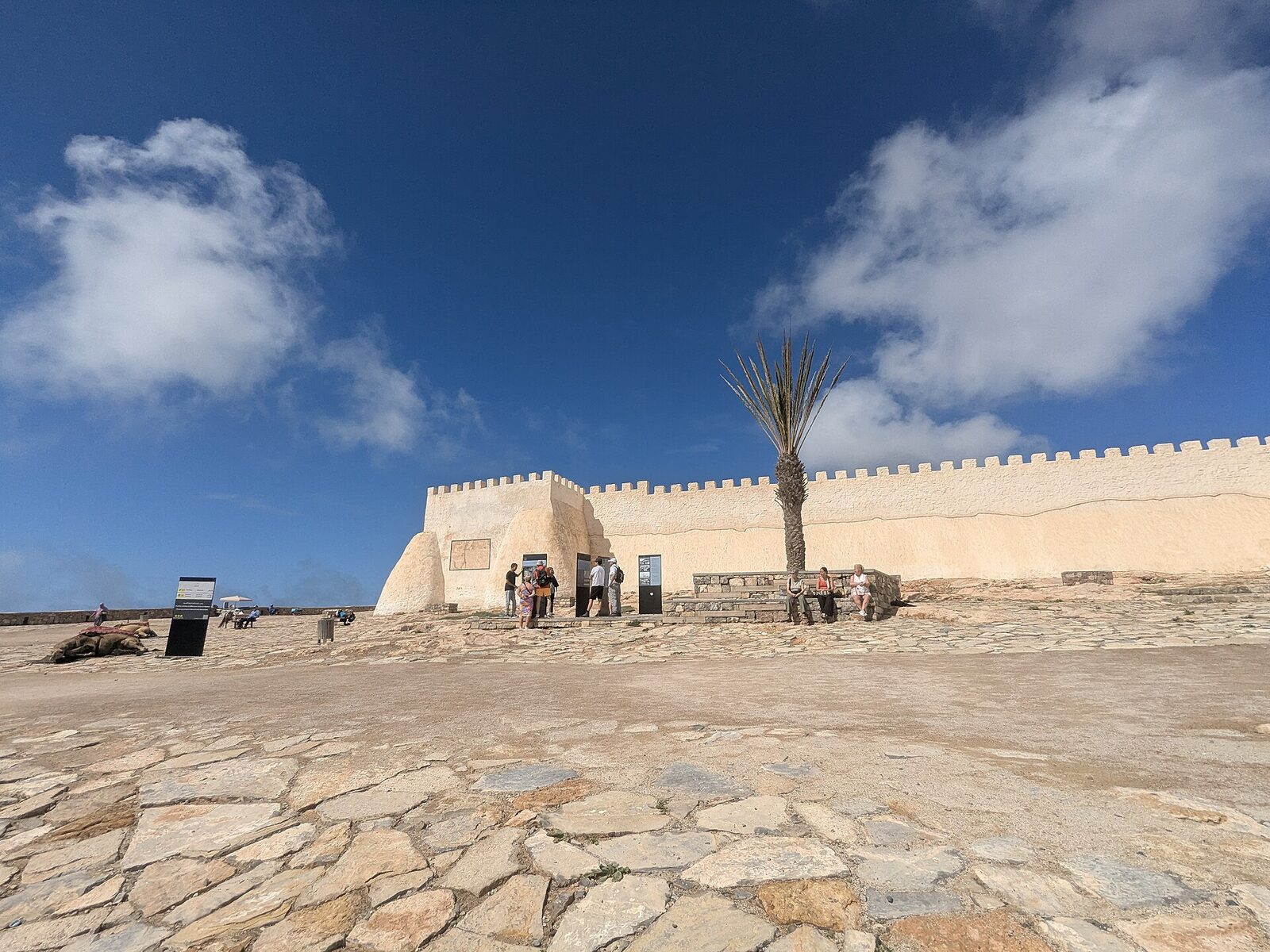
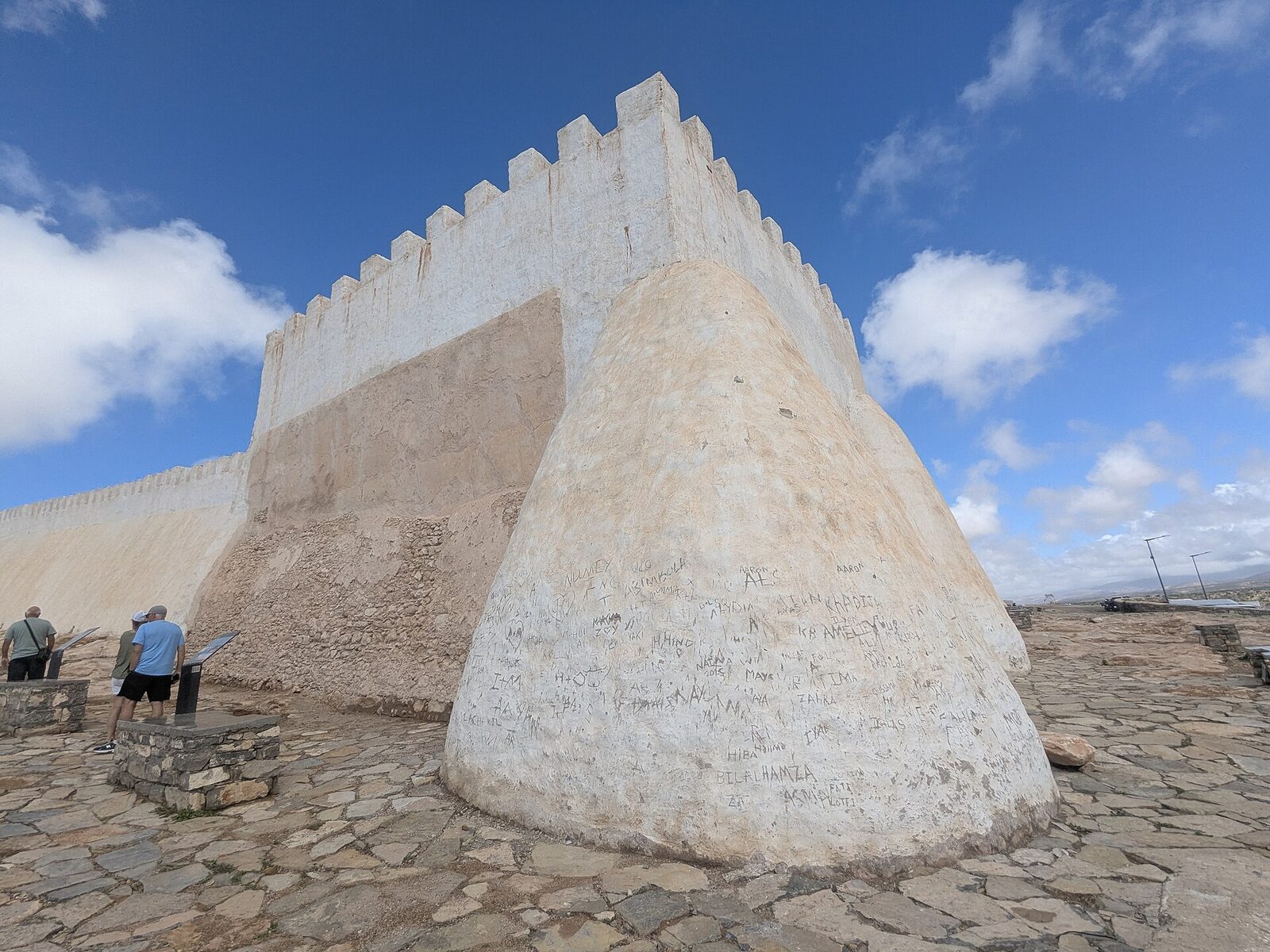
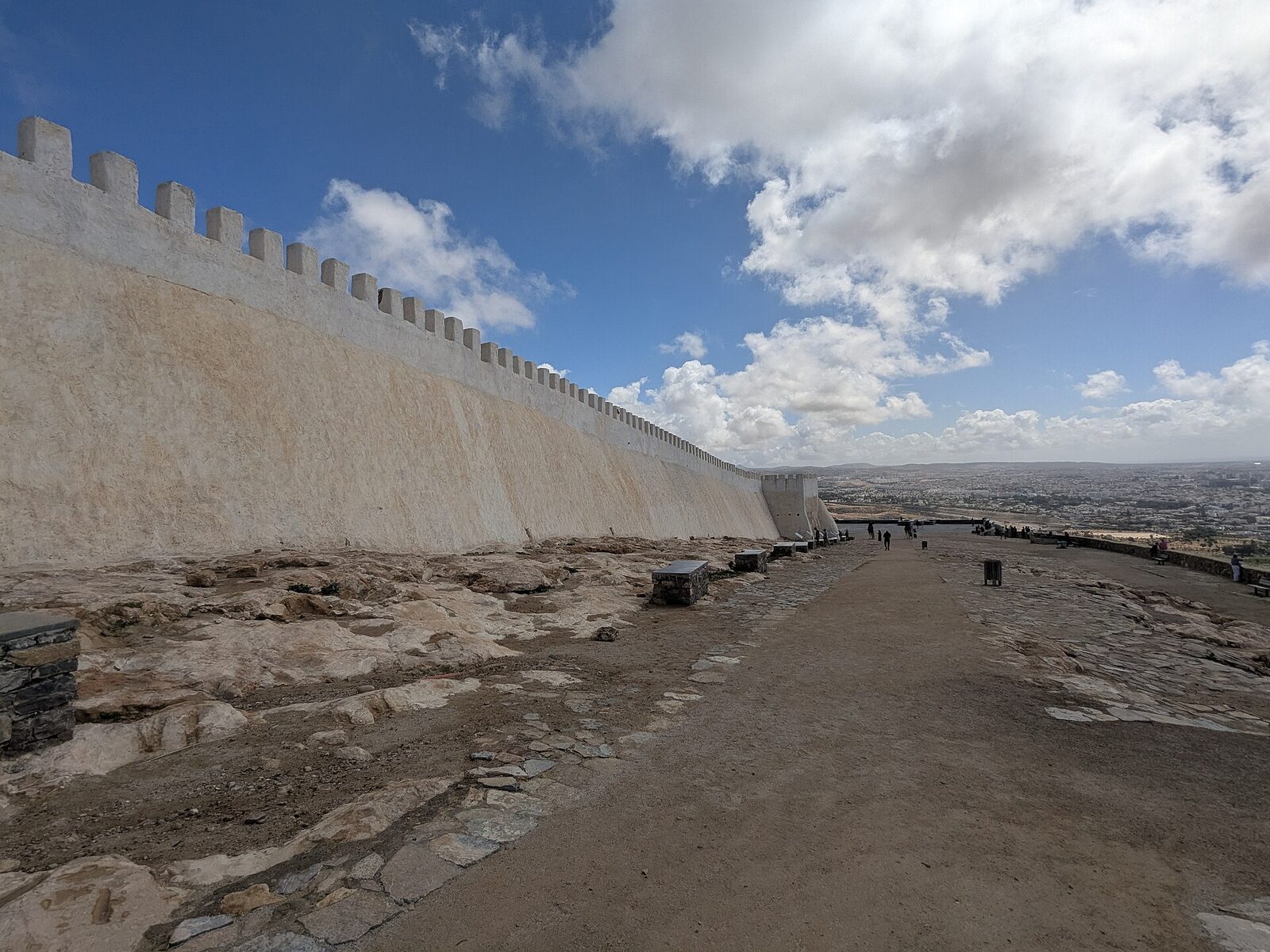
The wall is largely rebuilt. After decades of leaving the ruin as it was, the city restored sections of the fortifications — not the inside, just the outer wall and a walkable rampart — so that the silhouette from below matches what locals remember from old postcards. Walk through the main gate and you’re on bare hilltop ground. There are no interior buildings. No museum, no shops at the top, no recreated rooms. The space is left open, partly out of respect, partly because anything else would be inventing.
What you do see:
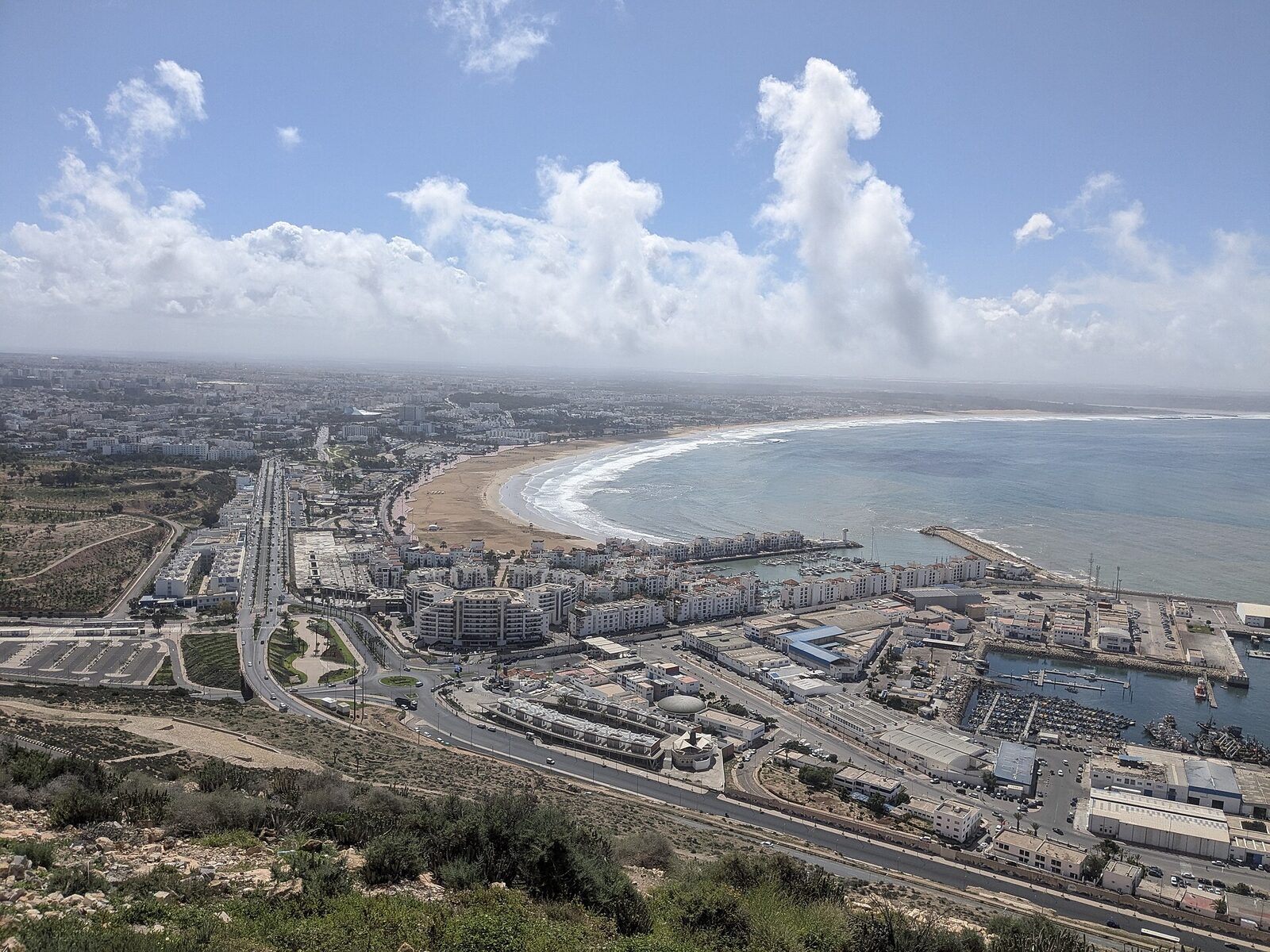
- The wall walk. A short loop along the restored ramparts. On the ocean side, the view down to the port and the curve of the bay is the keepsake shot — Agadir Marina, the corniche, the white grid of the city, the hills of the Anti-Atlas behind. On the inland side, you see the sprawl of new Agadir and, on clear days, the High Atlas in the far distance.
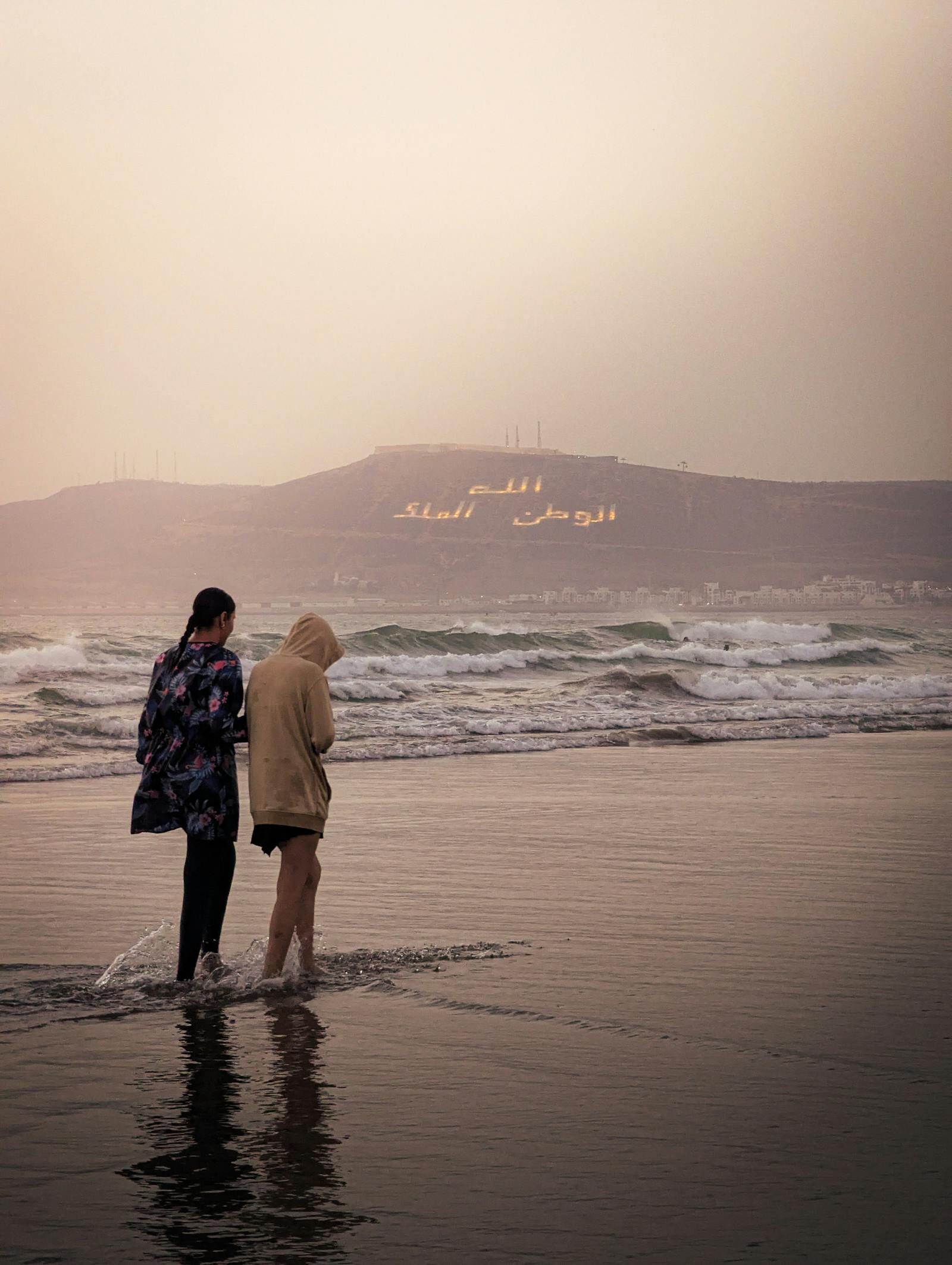
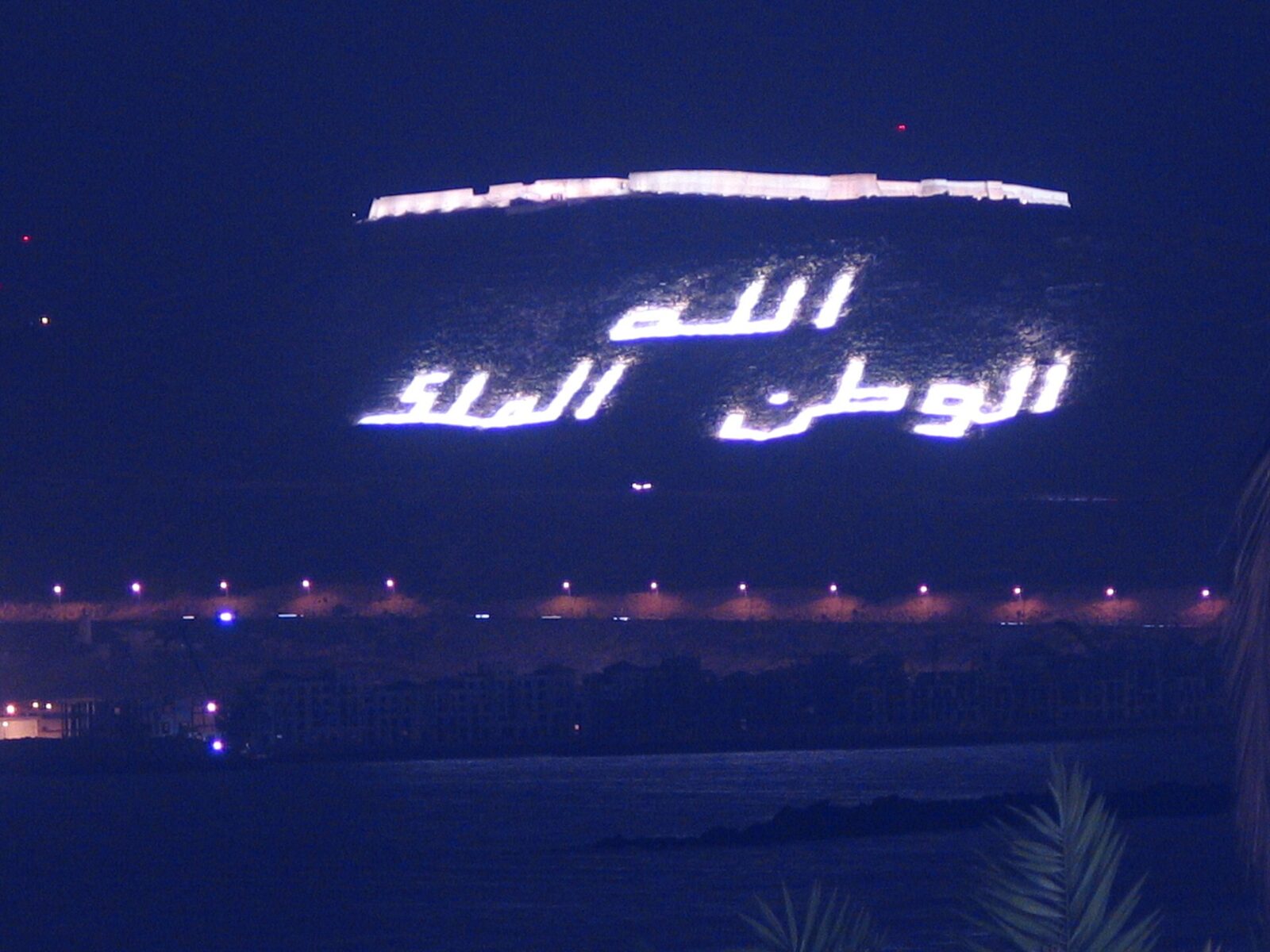
- The hillside inscription. Cut into the slope below the kasbah, in letters tens of metres tall, the Arabic phrase: الله، الوطن، الملك — “God, Country, King.” It’s lit at night and visible from much of the city. It’s the closest thing modern Agadir has to a logo. There’s a Google Maps marker for the inscription specifically if you want a closer angle.
- The 1960 memorial plaque. Brief, in French and Arabic. Easy to miss. Worth standing in front of for a minute.
- A small market area near the cable-car arrival point. Argan-oil cooperatives, a few souvenir stalls. Touristy in the polite way, not the aggressive way.
What you don’t see: a recreated kasbah interior. Anyone who’s promised you “the old Berber fortress experience” is selling you the silhouette, not the substance. Most of what was inside that wall in 1960 is in the ground beneath your feet.
Getting Up: Cable Car, Drive, or Walk
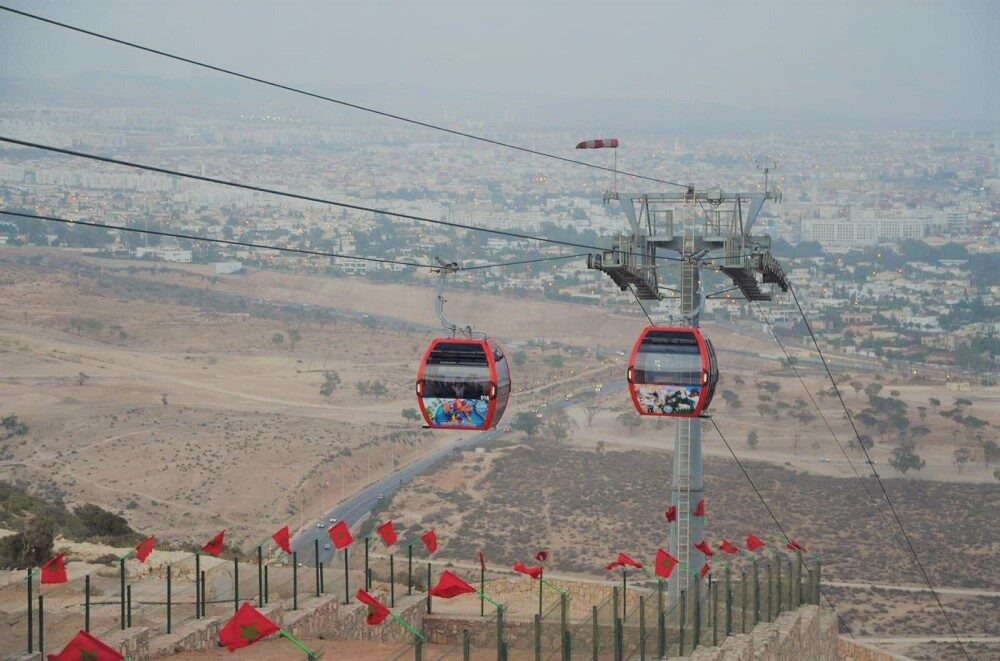
There are three honest options.
The cable car (téléphérique). Opened in 2023, the station is at the base of the hill near the port. The ride is short — around six minutes — and the view from the gondola down to the bay is genuinely worth the price of admission. Tickets run roughly 100 dirhams return for foreign visitors at the time of writing (always check on the day; prices have been adjusted more than once since opening). It’s the easy choice and the right one if you’re going at sunset.
Drive (or taxi). A switchback road runs up to a car park near the kasbah gate. Around 30 dirhams in a petit taxi from central Agadir; about the same to come back down. You skip the cable-car queues but lose the view-from-the-gondola.
Walk. A footpath from the port area climbs the hill in around 45 minutes at moderate pace. It is genuinely steep, exposed to the sun, and best done before 9am or after 5pm in any month from May to September. The reward is arriving slowly. Bring water.
Don’t combine “walk up, take cable car down” expecting to save money — you’ll still pay a one-way cable-car fare, and one-way tickets aren’t always on sale.
When to Go
The honest answer is the hour before sunset. The light hits the wall, the bay glows, and the call to maghreb prayer drifts up from the city at the right moment. The cable car runs into the evening; the car park has spaces; the photographs work. Plan to be on top forty-five minutes before sunset and stay until twenty minutes after. The blue hour over the bay is the best version of Agadir you’ll see.
Avoid: midday in summer (no shade, the wall walk is exposed), Friday lunchtime (mosque traffic on the road below), and the half-hour right after a cruise ship docks at the port. The hilltop is small. A coach group changes the feel.
Morning is fine if your day needs an early anchor. The light comes from behind you for the city-side view, which is less dramatic but more accurate.
What to Pair It With
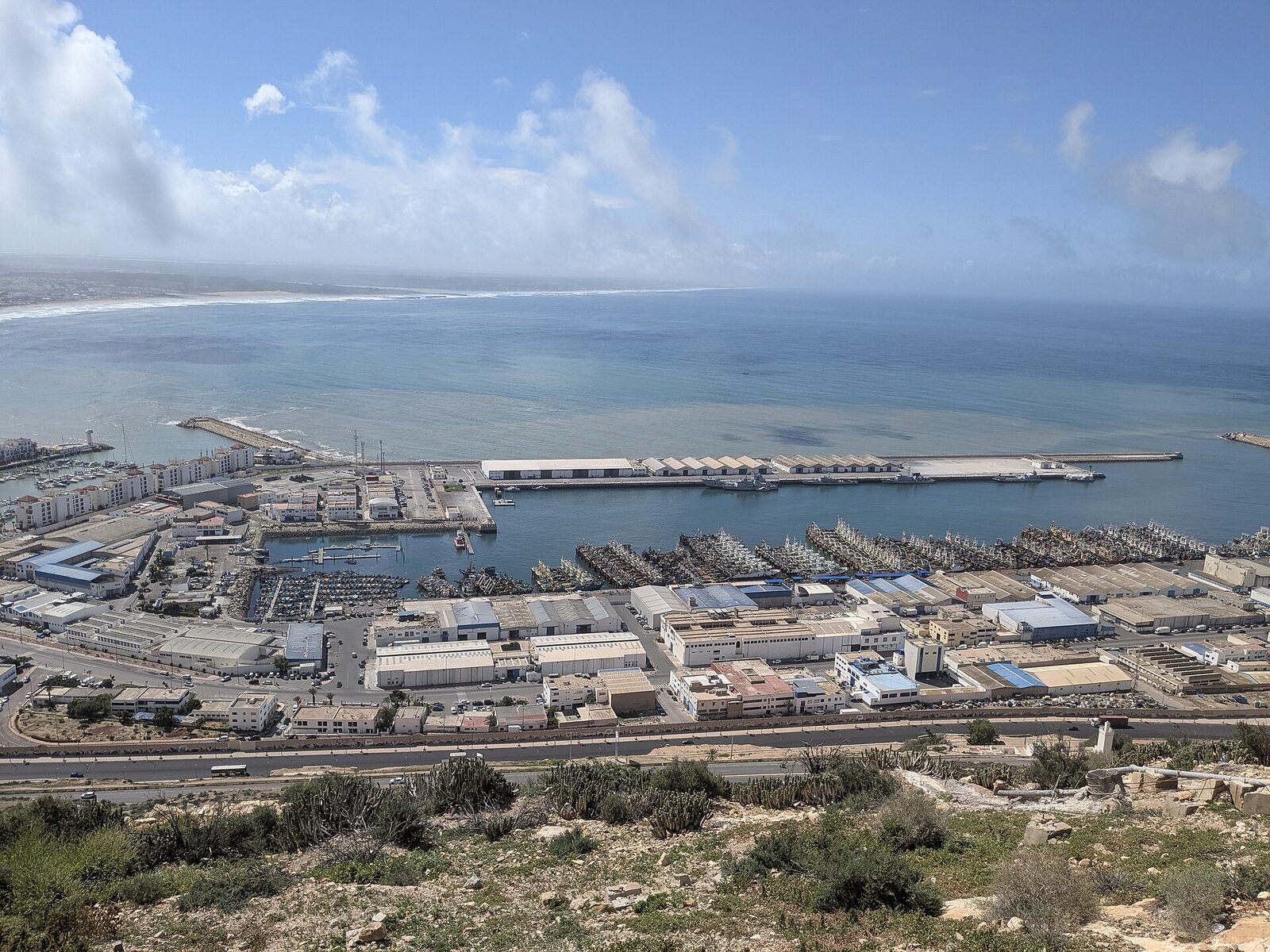
If you’re up at the kasbah, you’re close to the port and the Marina. The walk along the seafront from one to the other takes twenty minutes and crosses the section of the city that was rebuilt first after 1960 — the buildings here are mostly early-1960s modernist, low-rise, surprisingly elegant once you look up. The Agadir Art Museum in the same district holds a small collection of work by Souss-region artists; quick visit, free or near-free entry.
For dinner afterwards, the corniche restaurants south of the Marina are within a short petit-taxi ride. Our roundup of the best restaurants in Agadir covers the worthwhile ones.
A Note About the Hill Itself
The Saadians chose this spot because it controlled both the harbour and the road up to the Souss valley. The Portuguese held it briefly in the early sixteenth century. The Alaouites took it back. It was a working fortress until well into the nineteenth century. None of that history is on display in any structured way at the top — the city’s official memorial culture, understandably, points forwards from 1960 rather than backwards from before. If you want the longer story you’ll need to read about it before you go.
But the wall, the view, the inscription on the hillside, and the quiet at sunset — those carry the rest of what’s worth carrying.
Keep reading
 practical
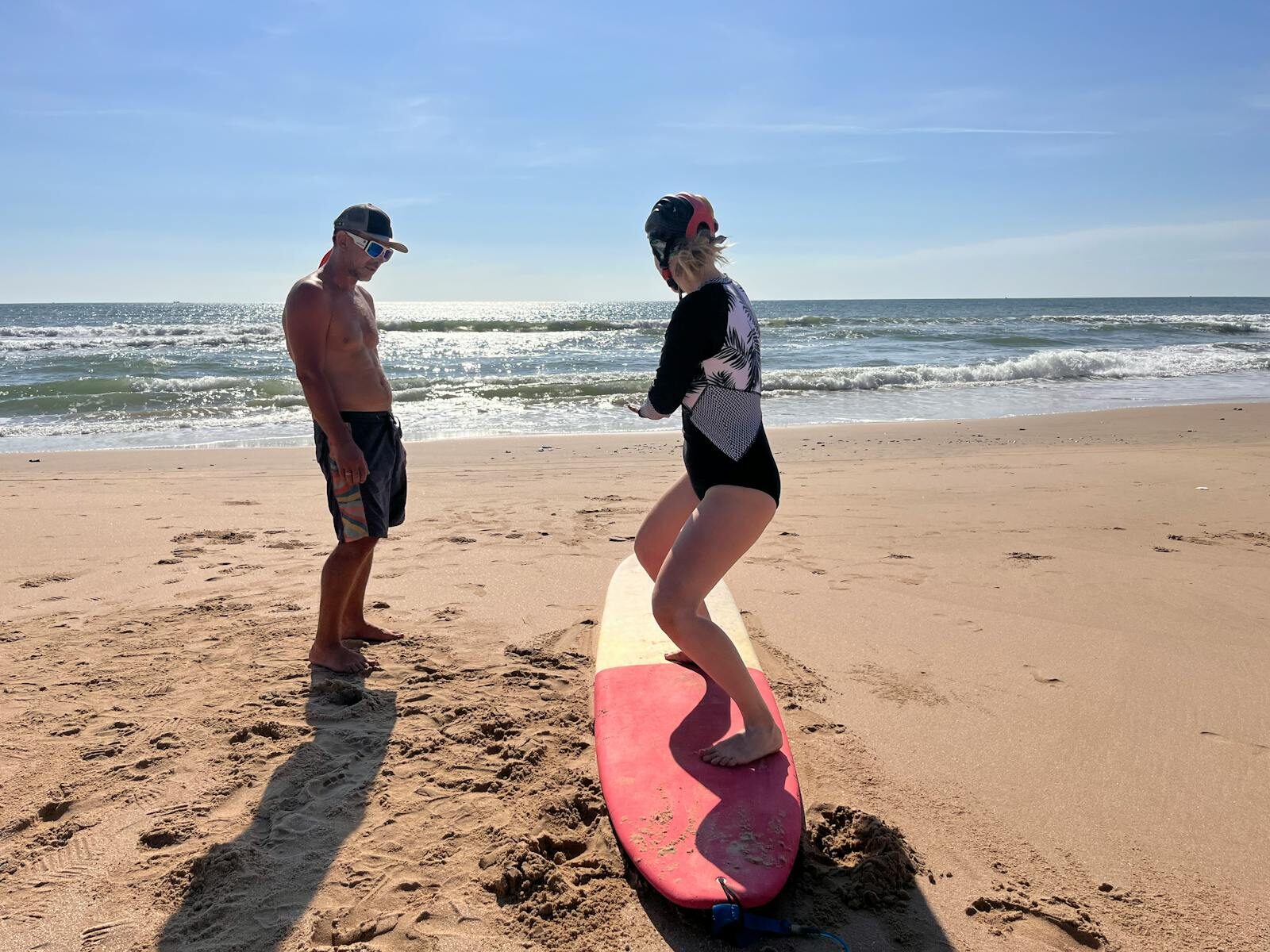
Surfing for Beginners in Morocco: Taghazout's Honest Reality 2026
A first-timer's honest guide to learning to surf in Morocco. The right breaks, the right week, the realistic costs, the surf-camps that actually teach beginners — without the brochure gloss.
 comparison
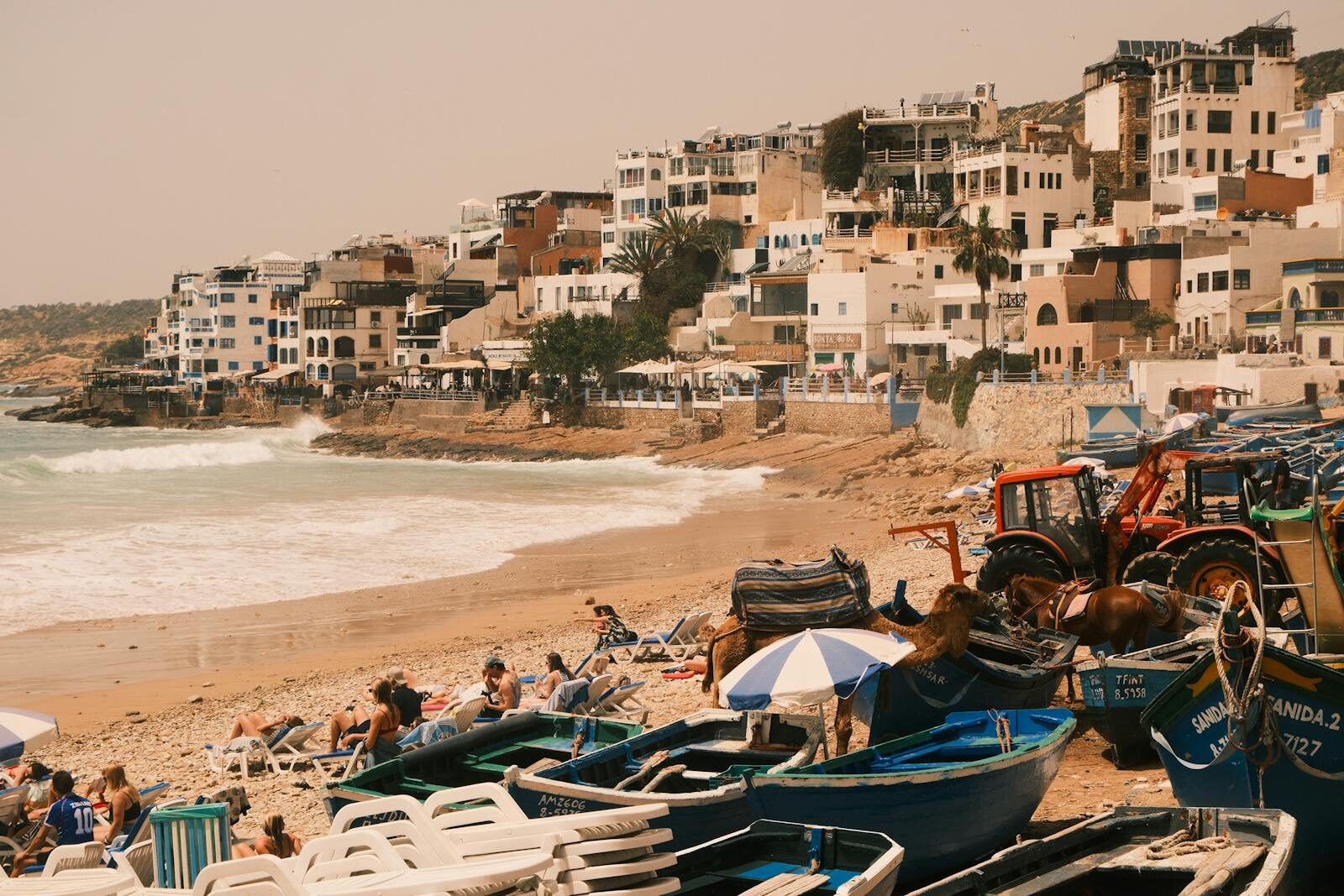
Taghazout vs Tamraght 2026: Where Should You Stay for Surfing?
An honest comparison of Taghazout village and Tamraght for a surf trip in 2026 — wave access, accommodation, food, vibe, cost, and getting around. Pick the right one.
 seasonal
Surfing in Taghazout by Season: When to Go for Your Level 2026
When to surf Taghazout depends on your level. An honest seasonal guide — winter for advanced surfers, summer for beginners, and shoulder months for the rest of us. Water temps, wave size, wetsuit thickness.